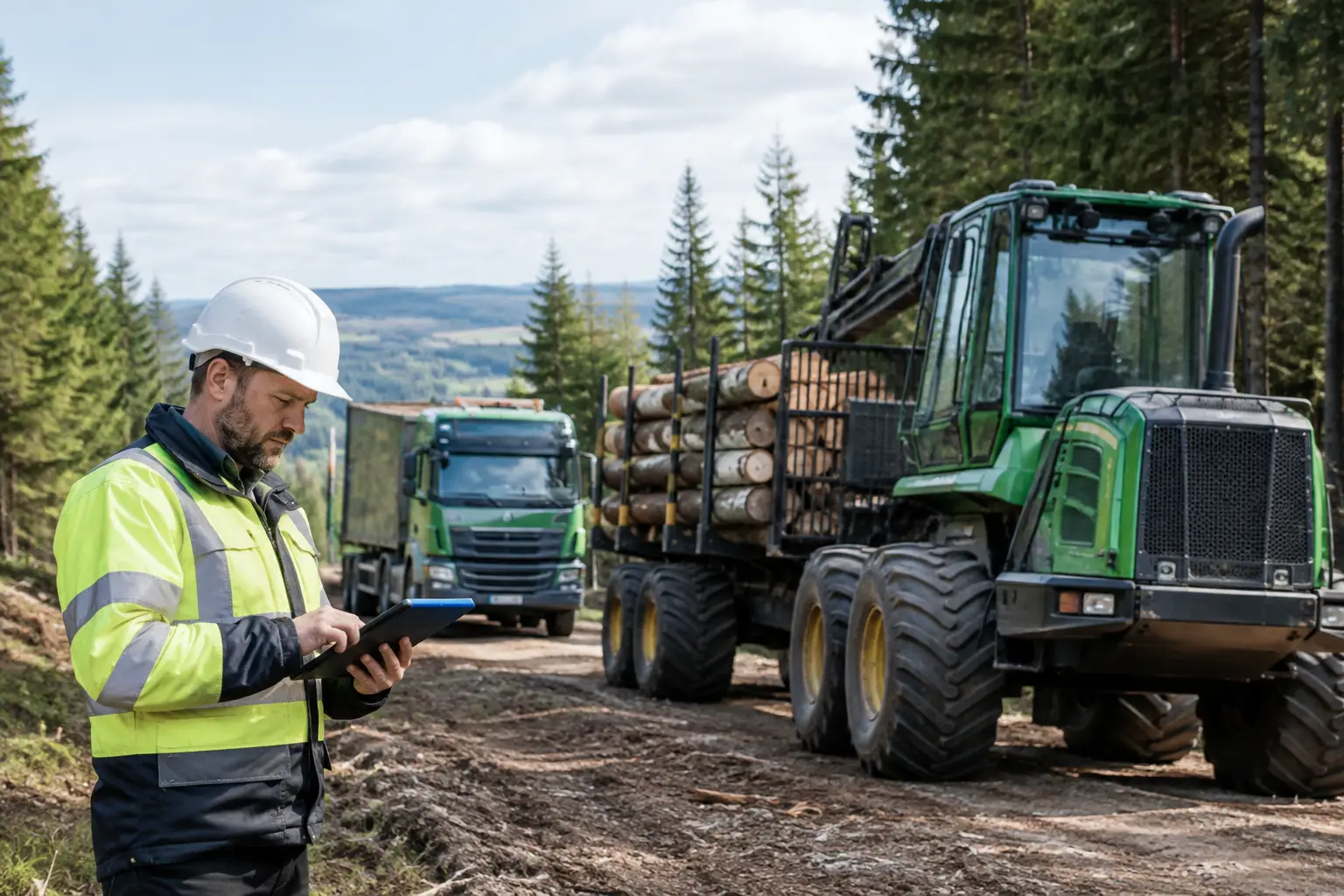
A forestry machine parked at the roadside can be costly. The same machine working on uneven ground, moving between sites or operating beside contractors carries a very different level of risk. Forestry vehicle fleet insurance is designed to bring those vehicles together under one commercial policy, helping businesses protect the equipment and people that keep woodland operations moving.
For many forestry contractors, estates and land-management businesses, the challenge is not simply insuring a tractor or pickup. It is arranging cover that reflects specialist machinery, multiple drivers, rural locations, seasonal work and the movement of vehicles between public roads, yards and worksites. The right policy depends on how each vehicle is used, where it travels and who operates it.
What forestry vehicle fleet insurance can cover
A fleet policy can cover a range of forestry and supporting vehicles under one renewal date and one set of documents. This can reduce administration for businesses operating more than one vehicle, particularly where the fleet includes a mix of road-going and specialist equipment.
Depending on insurer acceptance and the policy selected, a forestry fleet may include tractors, pickups, 4x4s, vans, tippers, lorries, trailers and plant used in connection with forestry work. Specialist machinery such as forwarders, harvesters, chippers and loaders may need to be declared separately, as cover can vary according to whether the vehicle is used on private land, transported between sites or driven on public roads.
The main cover levels are typically comprehensive, third party fire and theft, and third party only. Comprehensive cover may include accidental damage to an insured vehicle, but the detail matters. A policy may apply specific terms to off-road use, machinery attachments, theft from isolated locations or drivers with limited experience of specialist equipment.
Forestry businesses often need more than motor cover alone. Employers’ liability, public liability, tools and equipment cover, goods in transit and commercial property insurance may also be relevant. These are separate covers and should be considered against the work your business carries out.
Why forestry risks need closer attention
Forestry vehicles work in conditions that are unlike ordinary commercial fleets. Mud, steep inclines, restricted access, low branches, loose timber and changing weather all increase the chance of accidental damage. Road use can add another layer of exposure when a slow-moving tractor, loaded trailer or oversized machine is travelling between sites.
Theft is also a serious consideration. High-value machinery may be stored in remote compounds or left close to a work area. Insurers may ask about immobilisers, trackers, locked storage, key controls, fencing and CCTV. These measures do not guarantee cover or prevent every loss, but clear security arrangements can help an insurer understand the risk.
Driver arrangements matter too. A family-run operation may have several regular operators, while a larger contractor may use seasonal staff, subcontractors or agency drivers. Each arrangement needs to be disclosed accurately. A person who is permitted to operate machinery on private land is not automatically covered to drive an insured vehicle on the road.
Choosing cover for a mixed forestry fleet
A single fleet policy can be a practical option when vehicles are owned or operated by the same business and have similar insurance requirements. It can make it easier to add or remove vehicles during the policy term, subject to insurer agreement, rather than managing multiple separate renewals.
However, combining everything is not always the best route. Some specialist vehicles may require a standalone plant or engineering policy, especially where they are not registered for road use or their main exposure is while working rather than travelling. The value, age, replacement cost and use of each item will affect what is available.
When discussing forestry vehicle fleet insurance, be clear about whether machinery is:
- driven on public roads, private land or both;
- transported on a trailer or low-loader;
- hired in, hired out or used by subcontractors;
- fitted with attachments such as cranes, winches, chippers or harvesting heads; and
- stored at a depot, farm, yard, woodland site or the driver’s home.
This information helps avoid assumptions that could leave a gap between how a vehicle is used and how it is insured. It also gives an adviser the best chance of approaching suitable insurers from the outset.
What affects the cost of forestry fleet cover?
There is no single rate for forestry fleets. Premiums are based on the overall risk, not just the number of vehicles. A small business with two well-secured pickups and experienced drivers may look very different to a contractor operating several high-value machines across multiple counties.
Insurers commonly consider the number and type of vehicles, their values, driver ages and experience, claims history, annual mileage and overnight storage. They may also look at postcode areas, the nature of contracts, road-going use, convictions, licence types and the excess your business is prepared to pay following a claim.
Choosing a higher voluntary excess can sometimes reduce the premium, but it means your business would pay more towards an accepted claim. That trade-off should be realistic for your cash flow. The cheapest quotation is not always the most suitable if it excludes a key vehicle use, limits drivers too tightly or leaves a specialist machine undervalued.
Accurate vehicle values are particularly important. Replacing a forestry vehicle can involve long lead times and significant cost. If a machine has been modified or fitted with expensive attachments, tell the insurer. Standard market values may not reflect its true replacement position.
Information to prepare before requesting a quote
A well-prepared enquiry can make the quotation process quicker and more accurate. Have registration numbers, vehicle descriptions, values and ownership details ready. For unregistered machinery, serial numbers and clear descriptions can be useful.
You should also be able to explain the work undertaken, the operating radius, where vehicles are kept overnight and who will drive them. Details of claims and motoring convictions normally need to be provided, along with the dates and costs of any past incidents where known.
If your fleet changes frequently, mention this early. Some businesses buy and sell vehicles, bring in seasonal machinery or take on short-term contracts that require additional drivers. A policy with a straightforward mid-term adjustment process can be just as valuable as the initial price.
Claims support when machinery is out of action
A damaged forestry vehicle can affect far more than transport. It can delay site clearance, interrupt a harvesting schedule and leave a team unable to complete contracted work. Notify an incident as soon as possible and take sensible steps to prevent further damage, provided it is safe to do so.
Keep photographs, driver details, third-party information and any relevant site records. For theft, report the matter to the police promptly and retain the crime reference number. Do not authorise repairs or dispose of damaged property until the insurer or claims handler has confirmed what is required, unless emergency action is necessary to make the situation safe.
Policy cover, excesses and claims decisions will always depend on the specific wording and circumstances. A broker can help you report a claim and understand the next steps, but cannot promise an insurer’s decision. Fleet Brokers offers 24/7 claims reporting through iRevolution Claims, helping customers start the process when an incident cannot wait until the next working day.
Get forestry fleet cover that reflects the work
Forestry operations are varied, and insurance should reflect that reality rather than force every vehicle into a standard van or car category. Explain the machinery, the locations, the drivers and the way work is won and completed. An independent specialist can then compare options across available insurer and wholesale broker markets and explain the terms in plain English.
Before your next renewal, review whether your declared vehicles, values and working practices still match the business you run now. A clear conversation at the start can make arranging cover simpler and give your team greater confidence when the next job takes them off the beaten track.