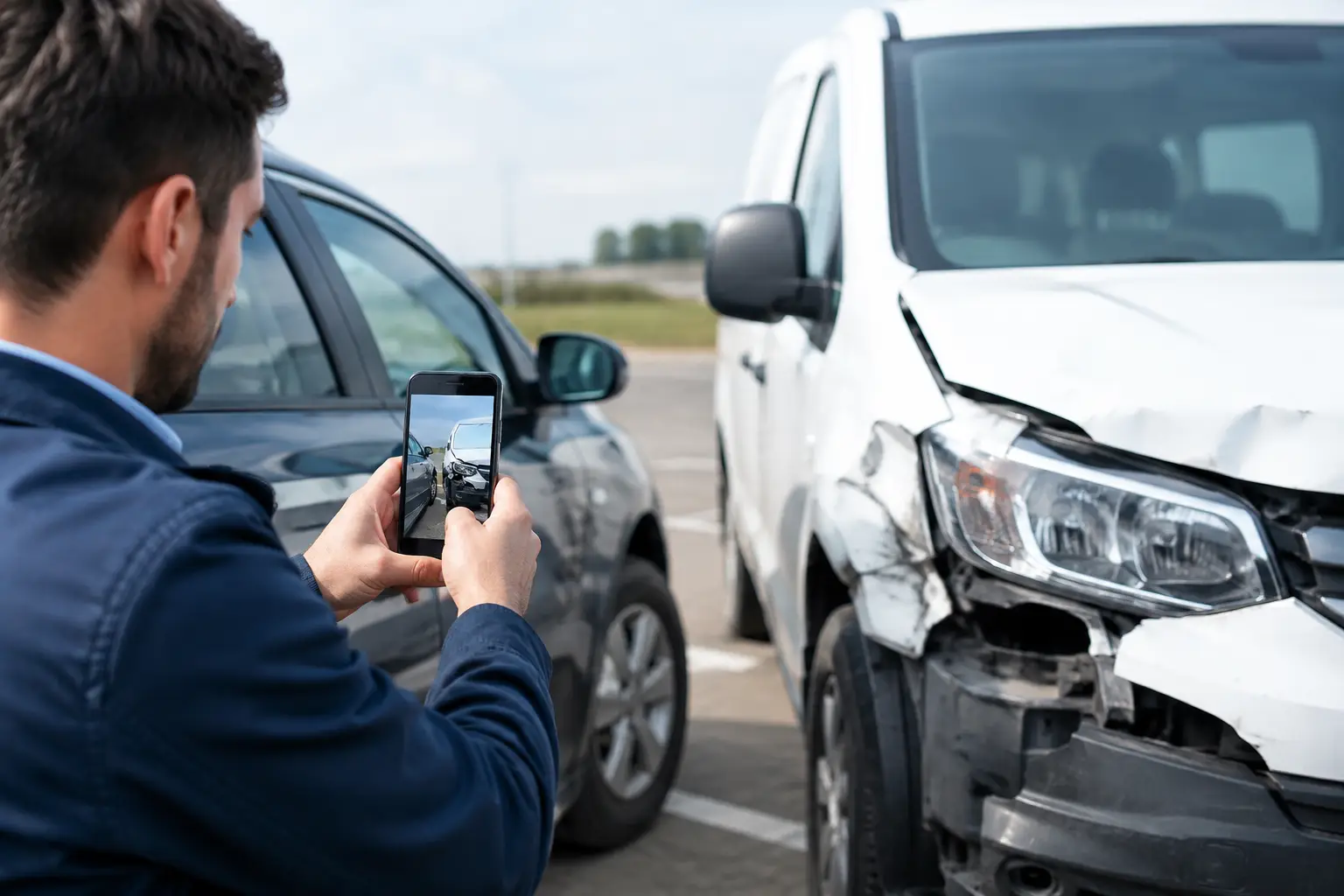
A collision on a delivery round, damage found in a depot or an allegation from another road user can quickly take a vehicle out of service. A clear guide to motor claims evidence gives fleet operators a practical way to protect the facts, support the claims process and make informed decisions while the incident is still fresh. The aim is not to prove fault at the roadside. It is to record accurate information safely, notify the incident promptly and help your insurer assess the claim.
Why motor claims evidence matters to a fleet
For a business fleet, an incomplete incident record can create delays at exactly the wrong time. Your insurer may need to establish what happened, identify the vehicles and drivers involved, assess damage, contact third parties and confirm the cover available under the policy. Good evidence helps provide a clearer starting point for that work.
It can also help your own operation. A timestamped photograph may show whether damage is new or pre-existing. A vehicle tracking record can confirm a route, location and journey time. A detailed driver report can help you spot recurring risks, such as a difficult site entrance, reversing issue or repeated third-party allegation.
Evidence does not guarantee a particular claims outcome, and liability decisions depend on the circumstances and the insurer’s assessment. However, accurate records reduce avoidable uncertainty. For a fleet with tight schedules, that can mean less time chasing basic information and more time arranging repairs, replacement transport or work reallocations.
Guide to motor claims evidence: the first hour
People come first. Drivers should stop where it is safe and lawful to do so, check whether anyone needs emergency assistance and follow your company’s incident procedure. If there is danger from traffic, fire, fuel, a damaged load or an unsafe vehicle, the priority is making the area as safe as reasonably possible and contacting the emergency services where needed.
Once the immediate risk is under control, the driver should exchange the required details with the other party. They should avoid admitting liability, arguing about blame or agreeing to pay for damage at the scene. A calm, factual approach protects everyone’s position while the claim is assessed properly.
Photographs and notes are most useful when taken promptly, provided it is safe to do so. If a driver cannot take them because of injury, road conditions or police instruction, that should be recorded later rather than guessed at.
What to collect at the scene
A single photo of a dent is rarely enough. The following evidence creates a fuller picture:
- Photographs of all vehicles, registration plates, damage, road position and the wider scene.
- Close and wide-angle images, including road markings, traffic signs, junctions, weather and visibility where relevant.
- The other driver’s name, contact details, registration number and insurer details if provided.
- Names and contact details for independent witnesses who are willing to provide them.
- The time, date, exact location, direction of travel and a simple description of what happened.
- Police incident or reference details, where police have attended or been contacted.
- Details of injuries, damaged property, passengers, loads, trailers or roadside hazards.
A brief sketch can still be valuable, especially at roundabouts, junctions and loading areas. It does not need to be artistic. Mark vehicle positions, lanes, travel direction and key features such as lights, parked vehicles or site gates.
Use vehicle records without relying on them alone
Many commercial vehicles generate useful information through telematics, dashcams, trackers and driver apps. These records can add context that a photograph cannot provide, such as speed, braking, location, route history and the time an engine was switched off.
That said, technology needs sensible handling. A telematics event may show harsh braking, but not why the driver braked. Dashcam footage may not show every angle of an incident. GPS locations can be less precise in dense urban areas, warehouses or remote locations. Treat these records as part of the evidence, not the whole story.
Preserve relevant footage and data as soon as possible. Some systems overwrite recordings after a short period, and it may be difficult to retrieve information once that happens. Your internal process should identify who can download footage, where it is stored and how it is labelled against the incident reference.
Keep statements factual and consistent
A driver’s first account is often one of the most useful documents in a motor claim. Ask for it while events are fresh, but give the driver room to write what they saw rather than supplying a version for them. The report should distinguish between facts and uncertainty. For example, “I saw the vehicle move into my lane” is clearer than speculating about what the other driver may have intended.
Encourage drivers to include practical detail: their speed if known, the manoeuvre being carried out, road and weather conditions, whether lights or indicators were used, and anything said by the other party. If they do not know an answer, “unknown” is better than an estimate presented as fact.
Consistency matters across the driver report, accident book entry, telematics record and claim notification. Minor differences can happen, particularly after a stressful event, but a well-run reporting process limits confusion and follow-up questions.
Handle personal data with care
Claims evidence often contains personal information, including names, phone numbers, vehicle registrations, dashcam images and witness details. Store it securely and limit access to people who need it for claims handling, fleet management or legal and compliance purposes.
Avoid circulating scene images through informal group chats or personal email accounts. A central reporting route gives your business better control over information and makes it easier to find the complete file later. Where dashcams record members of the public, keep the footage only for as long as your business needs it in line with your data protection arrangements.
Notify the claim promptly
Report an incident to your insurer or claims handling service as soon as reasonably possible, even where damage appears minor or your driver believes they were not at fault. Policy terms and claims procedures vary, so check the documentation for the notification requirements that apply to your fleet.
When reporting, provide the facts and send the available evidence in an organised form. A useful claim file normally includes the driver statement, photographs, third-party information, witness details, police reference where applicable and relevant telematics or dashcam material. Keep copies of everything submitted and record the claim reference, the date notified and the person responsible for follow-up.
For Fleet Brokers customers, 24/7 claims reporting through iRevolution Claims provides a route to notify incidents promptly. Early notification does not mean every question must be answered immediately. Submit the key facts, explain what further evidence is being obtained and update the claims handler when it is available.
Common evidence gaps to avoid
The most frequent problem is waiting until the end of a shift to report an incident. By then, vehicles may have moved, weather conditions may have changed and the driver’s recollection may be less precise. Another issue is taking photographs only of the fleet vehicle. Images of the wider scene and the other vehicle can be equally relevant.
Pre-existing damage can also complicate a claim. Regular vehicle walkaround checks, dated condition photographs and defect reporting give you a better record of a vehicle’s condition before an incident. This is particularly useful for vans, hire vehicles, trailers and plant that may have several users.
Finally, do not let repair arrangements get ahead of the claims process unless your insurer or claims handler has confirmed the appropriate next step. Emergency action may be necessary to make a vehicle safe or prevent further loss, but retain invoices, photographs and details of the work carried out.
Build evidence collection into daily fleet operations
The best time to design a claims evidence process is before an incident. Give every driver a simple, accessible reporting form on paper or mobile device. Include the information they must collect, who to call, what they must not say at the scene and how to submit photos or footage. New starters, temporary drivers and employees using their own vehicles for work should understand the same basic procedure.
Review incidents periodically with operations and transport managers. If reports repeatedly lack witness details, location information or vehicle condition records, improve the form or training rather than relying on reminders alone. For higher-risk work, such as courier deliveries, haulage, passenger transport or construction-site access, tailor the process to the situations drivers actually face.
A well-kept evidence file is not just paperwork after something goes wrong. It gives your business a clearer account of an incident, helps claims handlers ask the right questions and supports the practical work of keeping vehicles on the road. When the next call comes in, a calm process and good records will be far more useful than trying to reconstruct the facts days later.