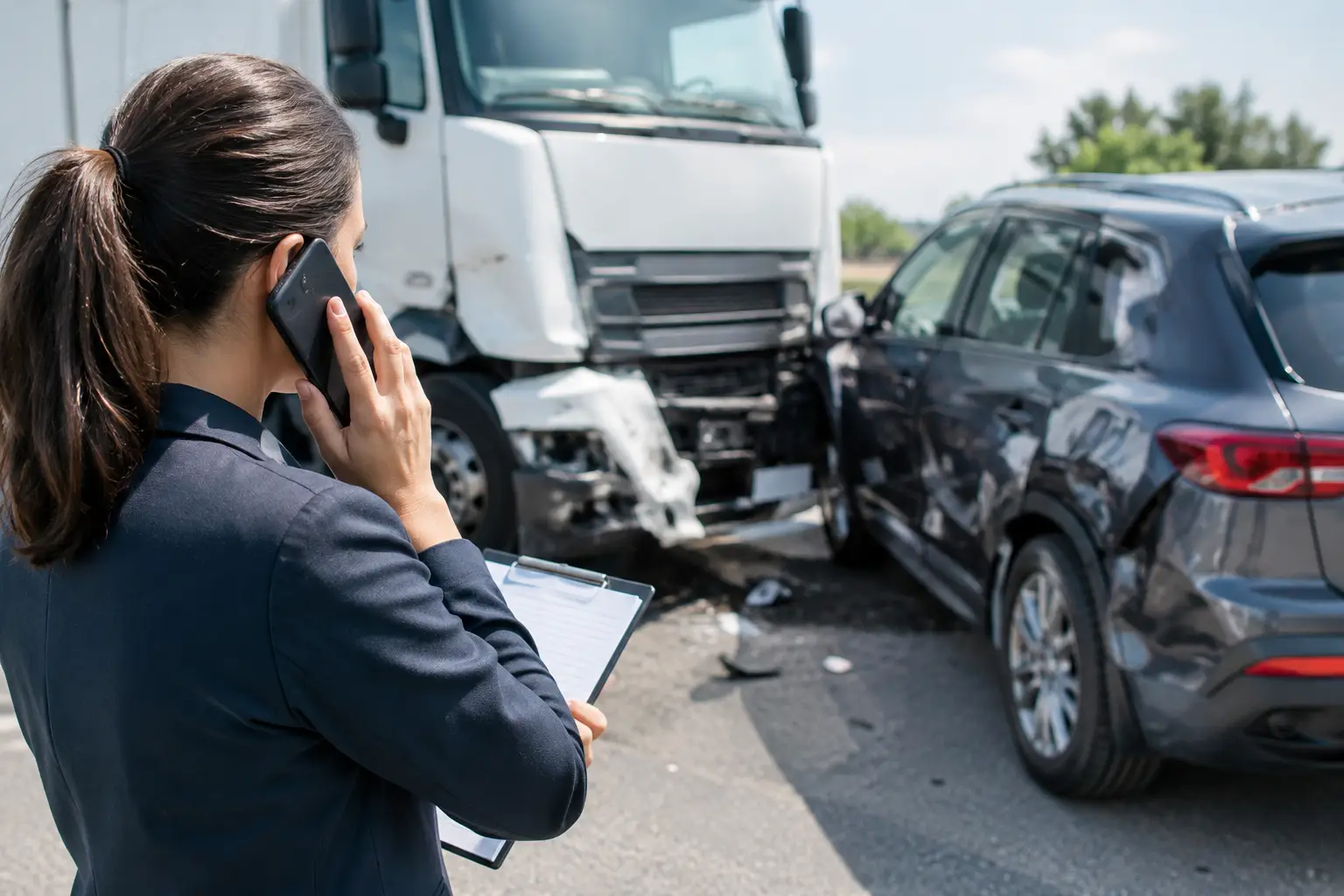
A collision involving a work van, company car, lorry or plant vehicle can disrupt far more than one journey. It may affect deliveries, staff safety, customer commitments and your claims record. Knowing how to report commercial vehicle accidents gives drivers and managers a clear process when pressure is high, helping protect the people involved and the information your insurer needs.
The right response will depend on the severity of the incident, the vehicles involved and whether anyone is injured. However, every business should have a simple, consistent reporting procedure that drivers can follow without having to make difficult decisions at the roadside.
Start with safety at the scene
Your driver’s first duty is to make the area as safe as reasonably possible. They should stop, switch on hazard lights and check whether anyone needs medical assistance. Call 999 where there is danger, injury, a blocked road, suspected criminal activity or an immediate risk to other road users.
Drivers should not put themselves at risk to take photographs or move vehicles. On a live motorway or fast road, for example, getting behind a damaged vehicle may be unsafe. Follow the instructions of the emergency services, highways officers or police if they attend.
Where it is safe, the driver should exchange the required details with the other party. This normally includes their name, business address, vehicle registration and the name and address of the vehicle owner if different. They should remain calm, avoid arguments and never admit fault, apologise in a way that could be taken as accepting liability, or agree to pay privately at the roadside.
A police report is not required for every minor collision. But if the required details cannot be exchanged, the incident should be reported to the police as soon as reasonably practicable and, in any event, within 24 hours. Your driver should also report any injury, suspected uninsured driver or serious road safety concern to the appropriate authorities.
What drivers should record after a commercial vehicle accident
Good evidence can make a material difference when insurers assess liability, vehicle damage and potential third-party claims. The details are often clearest at the scene, so drivers should record them as soon as it is safe to do so.
A practical accident report should cover the date, time and precise location, including the road name, junction or postcode where available. It should note the registration numbers, vehicle makes and colours, names and contact details of everyone involved, plus details of passengers and independent witnesses.
Photographs and video can be particularly useful. Drivers should capture the position of vehicles before they are moved where safe, damage to all vehicles, the wider road layout, traffic signs, lane markings, weather conditions and any relevant debris or obstructions. If your vehicles use dashcams or telematics, preserve the footage promptly. Some systems overwrite recordings after a short period.
The driver should also write a factual account in their own words. Ask for what happened, not who they believe was to blame. A useful account records direction of travel, speed if known, manoeuvres, road conditions and what was seen or heard. This should be completed while events are fresh, ideally before the driver discusses the incident in detail with colleagues or customers.
Do not collect more personal information than is necessary, and keep accident records securely. Information about people involved in a collision should only be shared with those who need it for claims, legal or operational purposes.
How to report commercial vehicle accidents to your insurer
Notify your insurer or broker as soon as possible, even if your vehicle appears undamaged or you do not intend to make a claim. A third party may later allege injury or damage, and a delay can make it harder to investigate the circumstances properly.
Your policy documents will confirm the claims reporting route and any conditions that apply. Businesses with fleet insurance should make sure drivers and managers know who to contact outside normal office hours, particularly where vehicles operate evenings, weekends or across the UK.
When making the report, have the policy number, vehicle registration, driver details and incident information ready. Explain the facts clearly and provide copies of photographs, witness details, dashcam footage and police incident numbers where relevant. If the vehicle cannot be driven safely, tell the claims team where it is located and whether recovery is required.
Fleet Brokers customers can access 24/7 claims reporting through iRevolution Claims, helping them notify an incident promptly when it happens outside standard working hours. The claims handler can explain the next steps, including repair arrangements, recovery and what additional evidence may be needed.
Reporting an accident does not automatically mean you are accepting responsibility or that a claim will be paid. The insurer will consider the evidence, policy terms, circumstances and any third-party allegations before reaching a decision.
Tell your employer or fleet manager immediately
Drivers should also follow your internal reporting process straight away. A manager may need to arrange a replacement vehicle, contact customers about delayed work, secure goods in transit or check whether the driver needs welfare support.
For larger fleets, one person or team should take ownership of the incident file. They can check that evidence is retained, identify the correct vehicle and policy, and ensure that insurer communications are answered on time. This reduces duplicated reporting and prevents key information being lost between drivers, supervisors and administrators.
Keep the vehicle and evidence available
Unless the vehicle is unsafe or needs recovery, do not authorise repairs, disposal or alterations before the insurer has had an opportunity to assess the damage. Your policy may specify approved repairers or a process for arranging estimates and repairs.
This is especially relevant for specialist vehicles. A damaged refrigerated van, tipper, minibus, HGV, agricultural machine or vehicle with racking may need a more detailed inspection than a standard car. Equipment damage, load security and roadworthiness can all affect the next steps.
If goods, tools or equipment have been damaged or stolen following the incident, record these separately. Vehicle insurance, goods in transit cover and other business policies can respond differently, so clear evidence of ownership, condition and value is helpful. Do not assume every item is covered under the motor policy.
Common reporting mistakes that create avoidable problems
The most frequent issue is waiting to see whether the other party makes a claim. Prompt notification gives the insurer a fair opportunity to investigate and handle communications. It is also a mistake to rely only on a verbal account when photographs, dashcam footage or witness details may be available.
Another risk is allowing a driver to manage the matter informally. Even a low-speed scrape in a car park can lead to a later injury allegation or disagreement over damage. Drivers should not share policy documents unnecessarily, post about the collision on social media, or enter into private settlement arrangements without approval.
Finally, do not overlook internal follow-up. Review whether the incident indicates a training need, route risk, vehicle defect, loading issue or maintenance concern. This is not about blaming drivers for every event. It is about learning enough to reduce repeat incidents and keep vehicles safely on the road.
Build an accident process before you need it
A short accident pack in every vehicle can prevent confusion. It should include the claims contact details, a step-by-step reporting card, a form for incident details and guidance on photography. Digital versions are useful, but a printed copy is sensible if a driver has a flat phone battery or poor signal.
Managers should brief new starters, agency drivers and anyone using a company vehicle on the same process. Make clear when to call emergency services, who to notify internally and where accident records should be sent. For mixed fleets, tailor the instructions to the risks of each operation, from courier work in busy town centres to long-haul haulage, passenger transport or agricultural use.
A well-reported incident gives your insurer the best possible starting point and gives your business more control on a difficult day. Keep the process simple, practise it with your drivers, and make sure someone is always available to help turn a roadside problem into an organised next step.