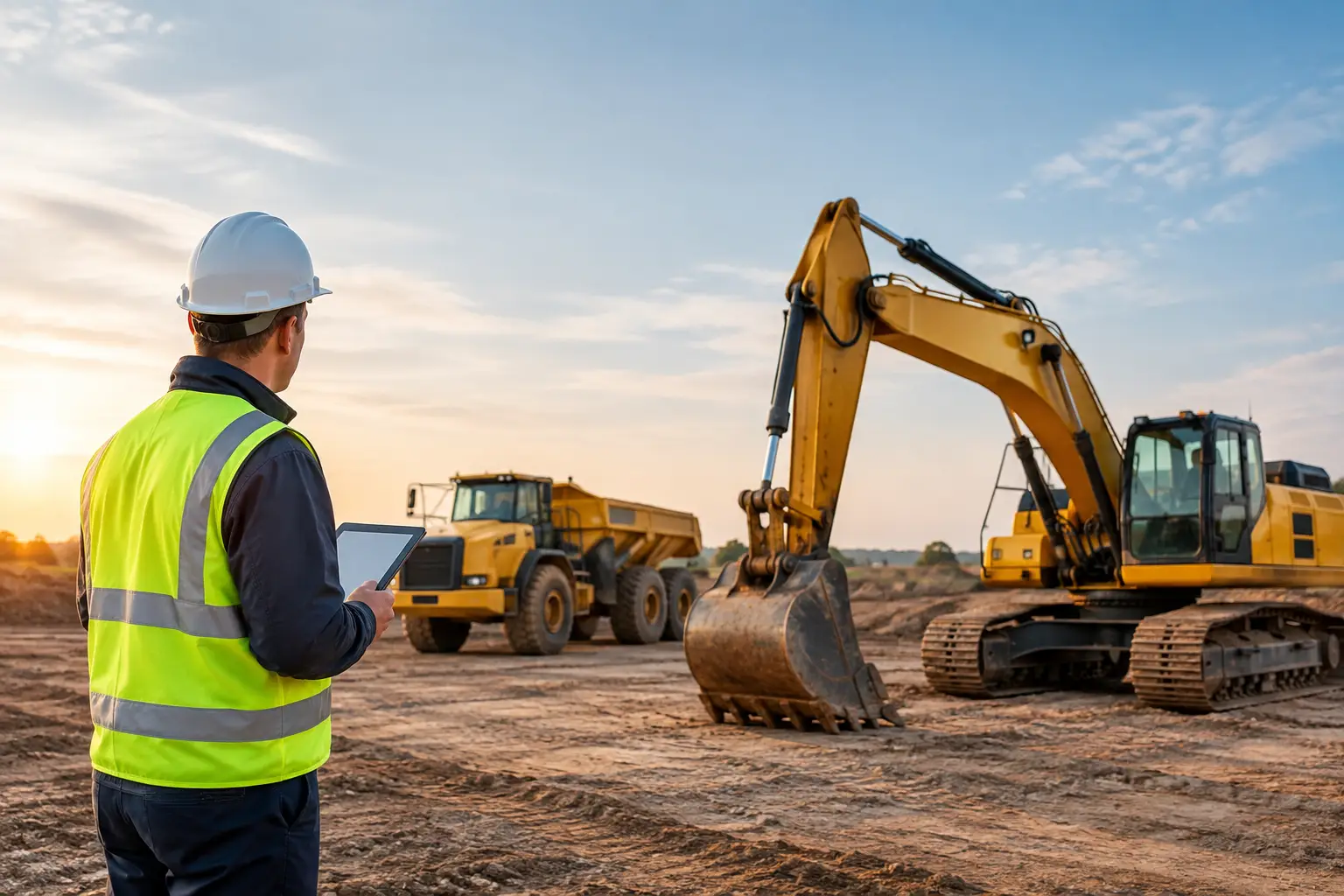
A tracked excavator is not simply another asset on a construction site. It may be moving between contracts, operating beside workers, sitting unattended overnight or travelling on a low-loader. Construction plant fleet insurance is designed around those practical risks, helping businesses insure a mix of plant and road vehicles under arrangements that reflect how they are actually used.
For contractors, civil engineering firms and plant operators, the right policy is about more than meeting a contract requirement. It helps protect cash flow after damage, theft or an incident involving third parties, while reducing the administration involved in managing several policies and renewal dates.
What is construction plant fleet insurance?
Construction plant fleet insurance is a commercial insurance arrangement for businesses operating multiple items of plant, often alongside vans, cars, lorries, trailers and other business vehicles. Depending on the insurer and the type of equipment, cover may be arranged on one fleet policy or alongside specialist plant insurance within a coordinated programme.
The key point is that plant does not always fit standard motor insurance. Some machines are road registered and travel between sites. Others are used solely on private land, construction sites or quarries. Their insurance needs can differ substantially, particularly where public liability, hired-in plant or theft from an open site are concerned.
A fleet-style arrangement can make sense where a business has a changing vehicle schedule, several drivers or a mixed operation. Rather than managing separate policies for every van and machine, you may have one central point of contact, a common renewal date and clearer visibility of what is insured.
Which vehicles and plant can be included?
Eligibility always depends on the insurer, vehicle details and your claims history. However, a construction business may need to consider cover for excavators, telehandlers, dumpers, rollers, loaders, cranes and access platforms, as well as site vans, pickups, tippers, lorries and trailers.
Some items need particular attention. A road-going vehicle, such as a tipper lorry, requires motor insurance appropriate to its use on public roads. A digger that is only ever operated on site may need plant cover rather than a conventional motor policy. If it is driven or moved on a road, the position can change. Your adviser should understand where each item is kept, how it is transported and who operates it before recommending an arrangement.
Owned plant is only part of the picture. Many contractors hire machinery to meet the demands of a specific job. Hire agreements can place responsibility for loss or damage on the hirer, so hired-in plant cover may be worth considering. Equally, if you hire out equipment to customers, you will need to disclose that activity clearly, as it changes the insurer’s view of risk.
Cover to consider for a working fleet
A policy should be built around the real cost of an incident, not just the purchase price of a machine. Comprehensive cover may help with accidental damage, fire and theft, subject to the policy terms and excess. Third-party liability protection is relevant where vehicles or plant could injure someone or damage their property.
The following areas are often relevant to construction businesses:
- Accidental damage and overturning: Heavy plant can be damaged during loading, excavation, lifting or work on uneven ground.
- Theft and attempted theft: Plant is attractive to thieves, especially when stored on unsecured sites or left overnight.
- Windscreens, attachments and accessories: Buckets, breakers, forks and specialist attachments may need to be declared and valued correctly.
- Recovery and replacement: A policy may assist following an insured loss, but replacement terms, hired replacement plant and downtime are not automatic.
- Liability and wider business cover: Public liability, employers’ liability and goods in transit insurance may be needed alongside fleet and plant protection.
Not every insurer offers every feature, and higher cover limits or broader extensions can affect the premium. It is also worth checking whether the policy settles on a new-for-old basis, market value or an agreed value. For specialist or modified plant, an inaccurate value can leave a shortfall at the point of claim.
The details insurers will want to know
Accurate information leads to more reliable quotations and fewer surprises later. Insurers usually want a schedule of vehicles and plant, including registrations, serial numbers, values, age and any modifications. They will also ask about usage, where equipment is stored, how often it moves between sites and whether it is hired in or hired out.
Driver and operator controls matter too. Insurers may ask about licence checks, training records, operator age restrictions and claims history. A telehandler operated by trained staff on a controlled site presents a different risk from machinery made available to a wide pool of casual operators.
Security is often central to theft cover. Explain whether you use immobilisers, trackers, key control, fenced compounds, CCTV, overnight lighting or guarded storage. These measures do not guarantee a claim will be paid, but they can support risk management and may be conditions of cover. If a policy requires a tracker to be active or keys to be removed, make sure site teams understand and follow the requirement.
Avoid gaps between motor, plant and liability cover
The most costly insurance problems often arise from assumptions. A contractor may assume that a road policy covers a machine while it is working on site, or that plant cover includes road use. Neither assumption is safe. The scope of cover depends on the wording, the machine and the declared use.
Loading and unloading is another common grey area. Damage while a machine is being moved onto a low-loader can involve the plant, the transport vehicle and third-party property. Clarifying these scenarios before cover starts is more useful than trying to establish responsibility after an accident.
Be equally clear about contract work. Local authority, utility and principal contractor agreements may specify minimum liability limits, conditions for working airside or requirements for hired equipment. Insurance should support those obligations, but it should not be assumed to replace contractual review or site safety procedures.
How to manage the premium without weakening protection
Premium is important, but the cheapest quotation can become expensive if it omits a machine, applies an unsuitable excess or restricts the way your team works. A practical review starts with a current asset list and removes plant that has been sold, written off or is no longer used.
Then consider whether your excess is realistic. A higher excess can reduce the premium, but it means the business retains more of the cost for each claim. That may be sensible for a large contractor with a planned maintenance budget, but less so for a smaller firm where one theft could disrupt a project.
Improving security, documenting operator training and maintaining clean claims information can also help present the risk properly. Do not understate values or usage to reduce the initial price. If the declaration is inaccurate, it may delay a claim or affect the amount paid.
When a fleet policy is likely to help
A single construction firm with two vans and one excavator may still benefit from specialist advice, although separate policies can sometimes be more suitable. As the number of vehicles, operators and sites grows, a fleet arrangement can offer more flexibility and reduce day-to-day administration.
It is particularly useful for businesses that replace vans regularly, add equipment for new contracts or operate a mix of road vehicles and plant. Ask whether additions and deletions can be made mid-term, whether unnamed drivers are available where appropriate, and how claims are reported outside office hours.
An independent broker can compare the available options and explain the trade-offs in plain English. Fleet Brokers can help construction businesses review mixed fleets, coordinate supporting covers and arrange suitable protection around operational needs.
Before accepting cover, read the policy schedule and endorsements, confirm every item of plant is listed or covered under the agreed terms, and keep valuations up to date. A short review before a machine goes to site can be far easier than dealing with an uninsured gap when the work is already under way.