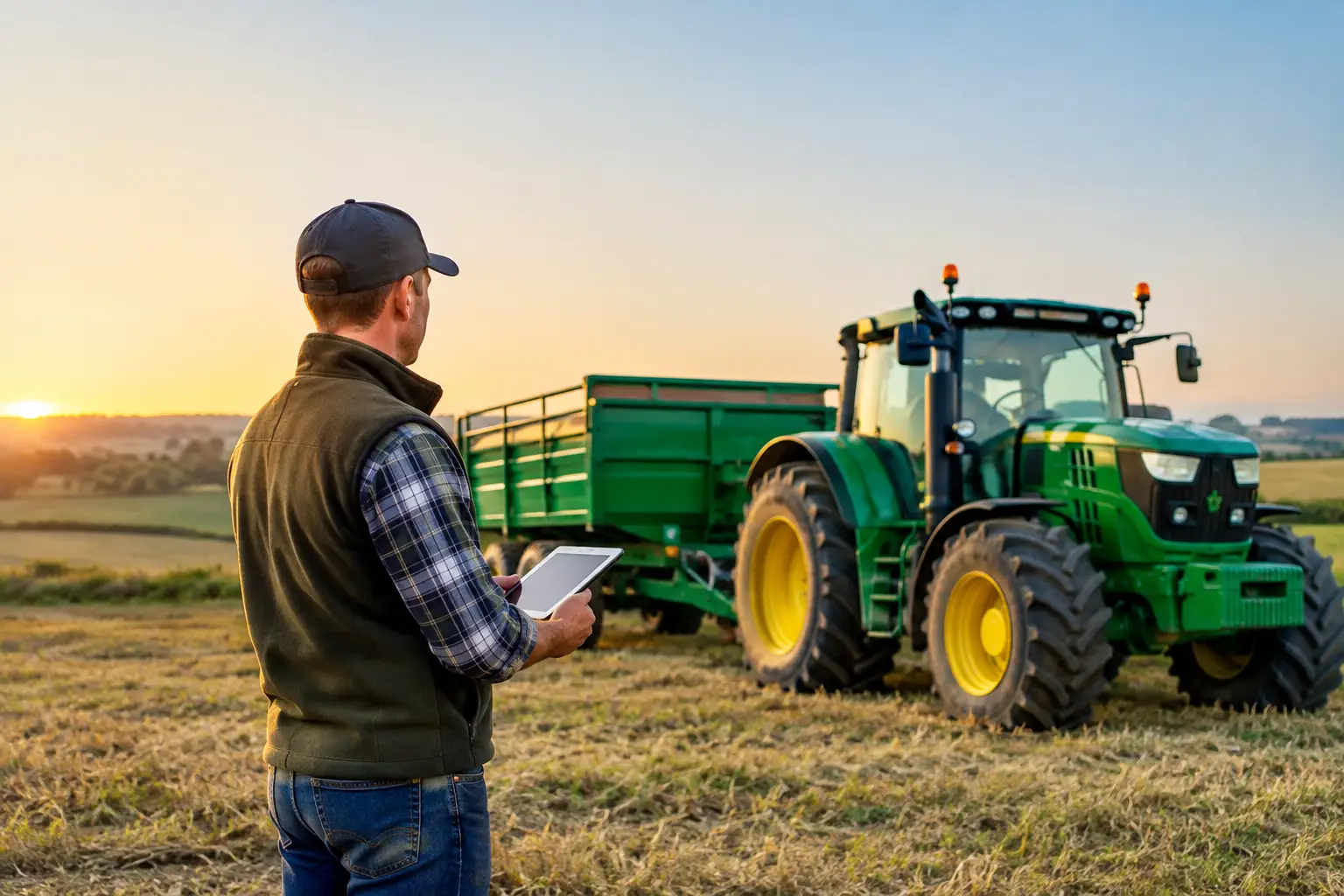
A tractor travelling between fields, a pick-up collecting parts, a telehandler loading grain and a trailer heading to a local holding can all create different insurance considerations. Agricultural fleet insurance UK policies are designed to bring those vehicles together under one commercial arrangement, reducing the administration involved in keeping a working farm, estate or contracting business properly insured.
The right policy is not simply about the number of vehicles. It should reflect where machinery is used, who drives it, whether it travels on public roads and how your operation changes through the year. A farm with three tractors used solely on private land has very different requirements from a mixed rural business running tractors, 4x4s, farm vans, trailers and machinery across several sites.
What is agricultural fleet insurance?
Agricultural fleet insurance is a commercial motor policy for businesses operating multiple farm and rural vehicles. Rather than arranging separate policies, renewal dates and documents for each vehicle, eligible vehicles can be insured under a single policy with one point of contact.
This can suit farms, agricultural contractors, estates, forestry businesses, equestrian operations and rural service firms. It may cover a combination of road-going and specialist vehicles, subject to insurer acceptance and the policy terms.
A fleet policy can make practical sense even for a smaller operation. There is no universal minimum number of vehicles for every insurer, and the most suitable arrangement depends on the mix of vehicles, claims history and how they are used. For some businesses, individual policies remain more appropriate. A specialist adviser can compare the options rather than assuming that a fleet policy will always be cheaper.
Vehicles that may be included
The value of a farm fleet policy is often its flexibility. Subject to underwriting, it may be possible to include tractors, combine harvesters, telehandlers, loaders, agricultural sprayers, ATVs and utility vehicles alongside pick-ups, cars, vans and lorries.
Trailers deserve particular attention. A trailer may need to be declared, scheduled or insured under separate terms depending on its type, value and use. The same applies to attachments and implements, such as mowers, ploughs and drills. Do not assume they are automatically covered because they are connected to an insured tractor.
Forestry vehicles and plant can also require specialist consideration. Their use off-road, on uneven ground, in woodland or on contract sites may affect the insurer’s appetite and the cover available. Clear descriptions of each vehicle and its normal use help avoid gaps caused by assumptions at quotation stage.
Choosing the right level of cover
Like other motor insurance, agricultural fleet cover is commonly available on a third-party only, third-party fire and theft, or comprehensive basis. The appropriate level depends on the vehicle, its value, your ability to absorb a loss and any finance agreement requirements.
Comprehensive cover may provide protection for accidental damage to insured vehicles as well as third-party liabilities, but the exact scope, excesses and exclusions vary. A high-value tractor or specialist machine can be expensive to repair and difficult to replace at short notice, particularly in peak season. That makes the quality of cover, approved repair arrangements and claims handling as important as the premium.
When reviewing a policy, ask specific questions about the following areas:
- use on public roads, including travel between fields, farms and contract sites;
- authorised drivers, age restrictions and whether occasional or seasonal drivers can be included;
- theft protection requirements, especially for high-value machinery stored in remote locations;
- trailers, implements, attachments and replacement vehicle arrangements; and
- use away from your own land, including agricultural contracting or forestry work.
Not every policy will cover every activity automatically. For example, a vehicle used for your own farm may be rated differently from one used to carry out paid work for other businesses. Being open about contract work, haulage, towing and road mileage gives the insurer a more accurate picture from the start.
Why one policy can make farm administration easier
Agricultural businesses rarely stand still. Vehicles may be bought before harvest, moved between locations, loaned within the business or replaced after a breakdown. A fleet policy can provide a clearer framework for making mid-term changes, with a single renewal date and a consolidated set of documents.
That does not mean every change is automatic. New vehicles and drivers should be notified in line with your policy conditions, and cover should be confirmed before a vehicle is put to work. A good fleet arrangement gives you a practical process for managing those changes, rather than leaving you to track several separate policies.
For operations with cars, vans and agricultural machinery, consolidation can also help identify overlaps. You may be able to arrange the motor side of the business around how vehicles are actually used, while considering related protections separately, such as goods in transit, employers’ liability, public liability and commercial property insurance.
Information insurers will want to see
Insurers assess agricultural fleets on the detail, not just the headline vehicle count. Providing accurate information early can make the quotation process quicker and reduce the risk of needing to revisit terms later.
Expect to discuss the vehicle register, including registrations, values and modifications, plus where vehicles are kept overnight. Insurers will usually ask about driver ages, licences, experience, claims and convictions. They will also want to understand annual mileage, road use, towing, the nature of any contracting work and the areas in which vehicles operate.
Security can be particularly relevant for tractors, quad bikes and plant. Garaging, locked compounds, keys kept separately, trackers and immobilisers may influence an insurer’s view of risk. Requirements differ, so it is worth checking what measures are required for each vehicle rather than investing in security on the assumption it meets every policy condition.
Claims history matters, but a past claim does not automatically prevent cover. The circumstances, cost, remedial actions and time since the incident can all be relevant. A clear explanation of what happened and what has changed since is usually more useful than supplying a claims total without context.
Common pressure points at claim time
The most frustrating insurance problems often start before a claim is made. A vehicle may have been used for undeclared contracting work, a young employee may have driven outside the agreed driver terms, or a trailer may not have been listed correctly. These issues are avoidable when the policy is built around day-to-day operations rather than a basic vehicle list.
If an incident occurs, report it promptly, preserve photographs or relevant details where safe to do so, and avoid arranging non-emergency repairs before the insurer or claims handler has confirmed the next steps. For theft, contact the police as well as your insurer. Keep records of service history, purchase values and serial numbers for machinery, as these can help establish ownership and value.
Operational continuity also matters. Ask how the claims process works outside standard office hours, whether replacement vehicles may be available, and who will keep you updated. A low premium has limited value if a key vehicle is left off the road during a critical period without clear support.
Agricultural fleet insurance UK: questions to ask before buying
Before accepting terms, make sure you understand who can drive, where each vehicle can be used and what excess applies to different types of claim. Check whether vehicle values are adequate, particularly where used machinery prices have risen, and confirm how trailers and attachments are treated.
It is also sensible to review the policy before seasonal peaks rather than waiting for renewal. Harvest, lambing, spraying and contracting periods can change vehicle use and driver availability quickly. Updating your cover before those changes begin is generally easier than resolving an issue after an incident.
Fleet Brokers can help businesses compare agricultural fleet insurance options through a broad insurer and wholesale broker panel, with straightforward guidance on the information insurers need. The aim is to arrange cover that reflects the vehicles you run and the work they do, not force a complex rural operation into a generic motor policy.
When your machinery, people and deadlines are all moving at once, take time to check that your insurance moves with them. A conversation with a fleet specialist before renewal or before adding a vehicle can provide the clarity needed to keep the work going.